
Synonym checker on Microsoft Programmes

Synonym checker word

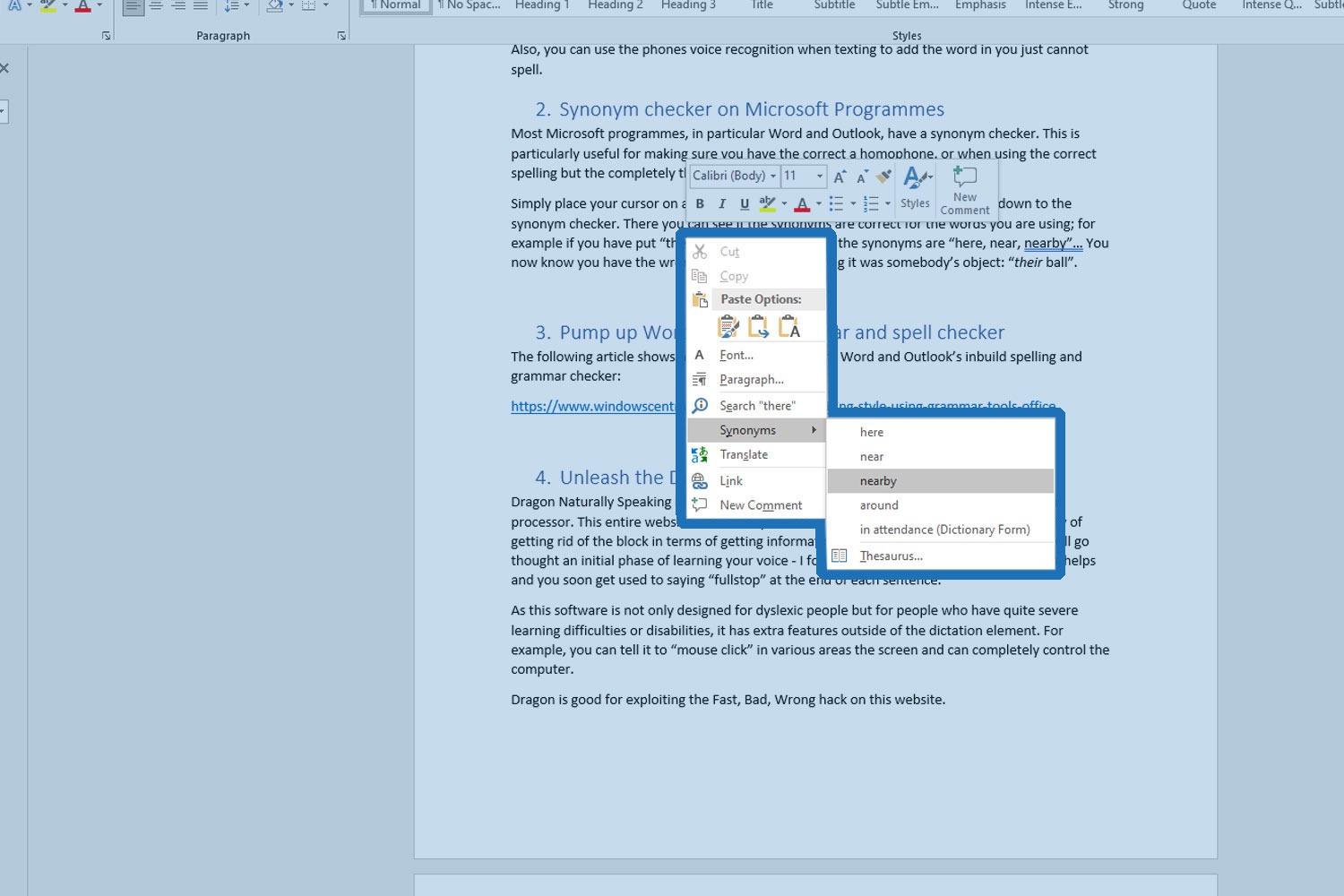
Most Microsoft programmes, in particular Word and Outlook, have a synonym checker. This is particularly useful for making sure you have the correct homophone, or when using the correct spelling but the completely wrong word than the one you intended.

Simply place your cursor on a word and with the right mouse click you can scroll down to the synonym checker. There you can see if the synonyms are correct for the words you are using; for example if you have put “there” in your sentence and the synonyms are “here, near, nearby”… You now know you have the wrong word if you were saying it was somebody’s object: “their ball”.


Like this hack?

You might also enjoy

Episode 92 – Could this be the ‘cure’ for Dyslexia with Dr. Robert Melillo?

In this episode, Matthew Head interviews Dr. Robert Melillo, a renowned specialist in childhood neurological disorders, about how understanding neuroanatomy can reshape dyslexia treatment. Dr. Melillo, creator of the ‘Melillo Method,’ has developed a holistic approach to address brain imbalances behind learning and behavioral disorders, including dyslexia, autism, and ADHD. He explains “functional disconnection,” a leading theory for understanding these conditions, and how his method combines brain exercises, nutrition, and lifestyle changes to help patients of all ages achieve brain and body balance. Dr. Melillo’s work, inspired by his children’s struggles with learning disabilities, aims to minimize dyslexia’s challenges while enhancing its strengths. This episode offers fresh insights into navigating dyslexia and explores Dr. Melillo’s research and bestselling books, which provide valuable resources for parents and educators.

iPhone, YouTube app
YouTube

YouTube is a great resource for dyslexics and non-dyslexics alike,

Episode 78 – Raising Awareness of Dyscalculia and Leaning into your Dyslexic Strengths with Emily Gee

Emily Gee, a dyslexic, dyscalculic, and dyspraxic individual, struggled in school but found solace in performing arts. Despite academic challenges, performing boosted her confidence and became her forte. Supported by understanding teachers and parents, Emily embraced her strengths, overcoming insecurities. Unlike dyslexia, dyscalculia lacks awareness and support in education. Emily, now advocating for the Dyscalculia Network, aims to raise awareness and early intervention for dyscalculia. Her journey underscores the importance of recognizing and nurturing strengths over weaknesses. This podcast episode resonates with parents of children displaying signs of dyslexia, dyspraxia, or dyscalculia, offering insights and encouragement.